

Interested in diving into research? Join ACM Research, an exclusive undergraduate program designed to introduce you to the world of research. You'll gain essential skills, access valuable resources, and receive mentorship from experienced researchers. Throughout the program, you'll develop sophisticated research ideas and work towards potential publication. Your journey will start with crafting compelling research questions and culminate in presenting your findings to industry and academic professionals at our symposium!
meet the directors

Priti See
Research Director

Purva Patel
Research Director
experience

ACM Research helped me gain research experience and land a paid research position as an undergraduate.
I got to learn a ton about AI/ML/NLP that your courses won't teach you.
ACM Research has been the essential building block to help me become a researcher that I want to be.
The community at Research was welcoming and we continue to do the same for every new member. The relationships formed with all the participants and leads definitely stay forever!
Qryptik
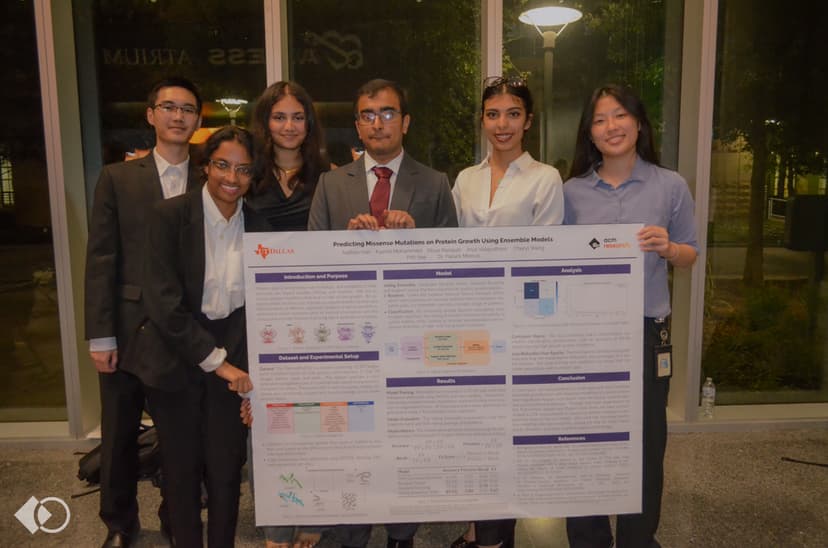
Description: Qryptik explores a novel frontier in cybersecurity by developing a next-generation post-quantum encryption (PQE) method designed to withstand attacks from quantum computers while remaining efficient enough to run on low-power devices like smartphones. As quantum computing threatens to break traditional encryption standards such as RSA and AES within days, the need for robust, scalable, and efficient cryptographic systems is more urgent than ever. Participants will explore the intersection of quantum resilience, machine learning, neural networks (CNNs), and cryptographic design, working hands-on with secure key generation, lattice-based systems (RLCE), matrix manipulation, and model compression techniques for low-compute environments.
Adveyes
Attention Deficit/Hyperactive Disorder (ADHD) is often diagnosed based on observed behavioral outcomes alone. Stemming from a desire for less subjectivity between diagnoses, techniques such as eye-tracking (and saccade-detection/saliency models) have been proven to be able to classify ADHD individuals. However, these techniques often require expensive hardware, which in turn requires the participant to come in person or risk forgoing a diagnosis due to costs. With the CDC declaring an increase of 1 million diagnoses in the past 4 years, resources are at an all time low, while demand is at a high. We propose the application of webcams instead of high end devices to explore the avenue of remote diagnostics and promote accessibility to people without access to such resources.